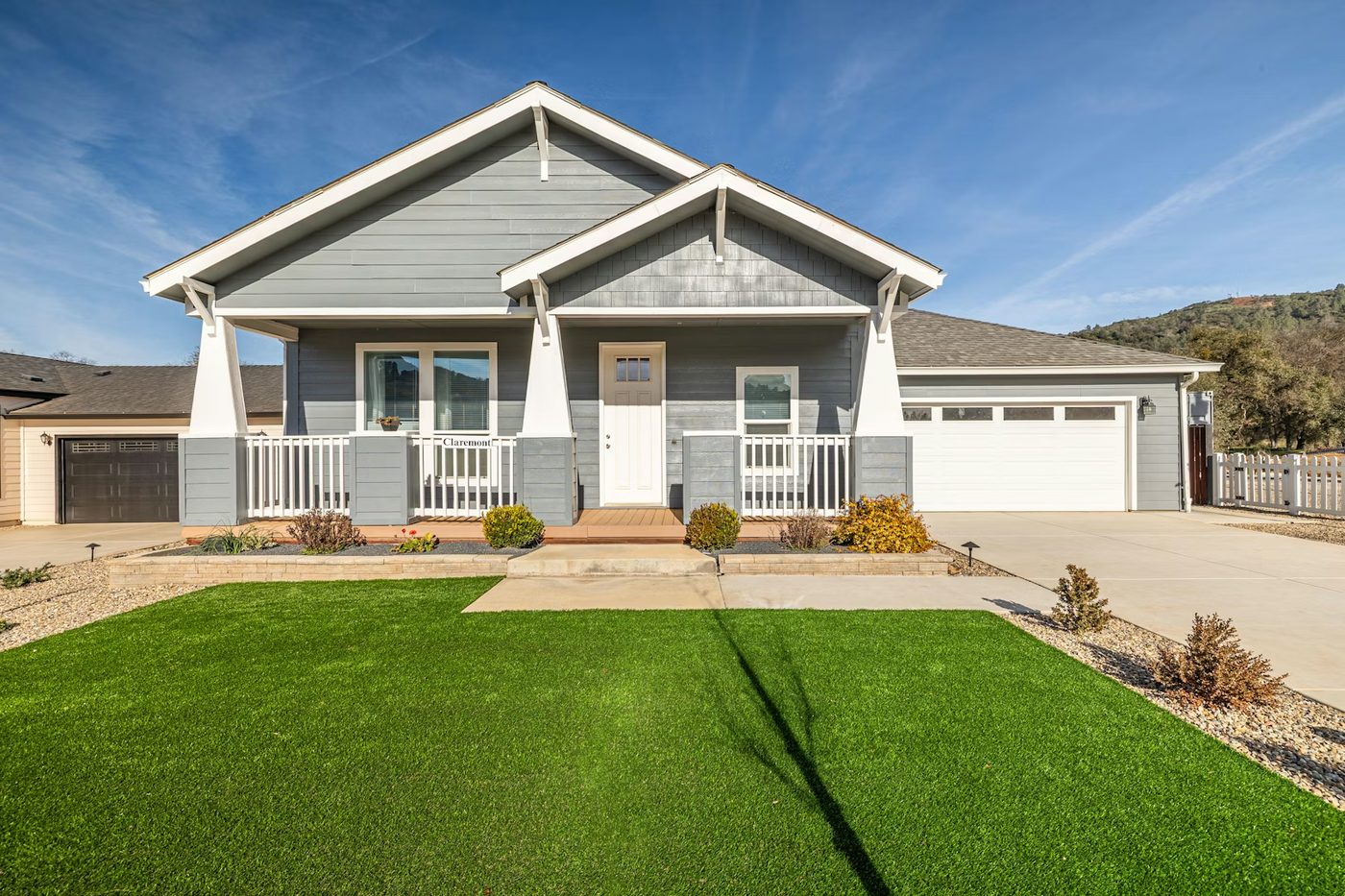
Same home, more affordable. A Performance Community gives a factory-built home the legal and financial standing of real estate — a permanent foundation, a long-term ground lease, real-property title, and a conventional 30-year mortgage — at roughly half the all-in cost of comparable site-built housing.
Individually, none is exotic. Applied together and engineered from the ground up, they move a home out of personal property — financed like a car, depreciating like one — and into real estate: financeable over thirty years, taxed as real, able to build equity. That single reclassification is what keeps the asset institutional-grade and the resident a homeowner.
The home is set on a permanent foundation — not piers or a temporary chassis tie-down — so it can be affixed to the land and treated as part of the real estate.
Each household holds its own long-term ground lease — typically 35 to 99 years — rather than renting a space month to month. The lease is long enough to support a conventional mortgage.
Foundation plus ground lease lets the home be classified and taxed as real property — not as personal property, the way most manufactured homes are titled today.
Real-property status opens the door to a 30-year conventional mortgage through Freddie Mac's Chapter 5706 leasehold program — the same kind of loan a site-built buyer would use.
When a manufactured home is financed as personal property, it behaves like a vehicle: the loan is short and the rate is high, and the home tends to lose value over time. The family pays for shelter, but builds little equity.
Financed as real estate, the home behaves like a house. A long, conventional mortgage means more of each payment goes toward principal, and the home holds the standing of real property. The same family, paying a comparable amount, can build equity instead of watching it erode.
That single shift — from chattel to real property — is the economic foundation beneath everything else our platform accomplishes.
Illustrative of the structural difference between chattel and real-property financing; not a projection of any individual outcome. Financing availability depends on lender participation and underwriting.
Real-property classification is the financial foundation. The platform standard goes further — into how a community is designed, built, and lived in.
Drawing on the founder's background in healthier buildings and LEED Platinum developments, communities will be evaluated for thoughtful amenities ranging from air and water quality, durable and low-toxicity materials, energy and water conservation, fire-resilient construction where location and insurability warrant it, as well as streetscapes held to a real standard of care. These features are pursued where the cost-benefit analysis supports them — held to the same discipline as every other underwriting decision.
See the four-dimension standard →A note on what's in place. Freddie Mac's Chapter 5706 leasehold-mortgage program is published GSE policy available today — not a pilot. A Performance Community is engineered from the ground up to qualify, and each of the platform's primary markets has a statutory path to real-property classification for long-term leasehold communities. Adoption of Chapter 5706 proceeds lender by lender, and activating it for a given community is work undertaken site by site; qualification is not guaranteed, and financing availability depends on lender participation, underwriting, and market conditions, which can change. References to financing programs describe published third-party policy and are not commitments by any lender. “A Performance Community” is a trademark of the platform; an application is pending.
The Performance Community standard is the platform's intellectual property — see the strategy that implements it.